Assessing Critical Road Hazard Factors for Sustainable Development in Cities
DOI:
https://doi.org/10.59543/ijsdg.v1i.14189Keywords:
Sustainable Development Goals, Road Safety, Road Hazards, Fuzzy Sets, Multi-Criteria Decision-MakingAbstract
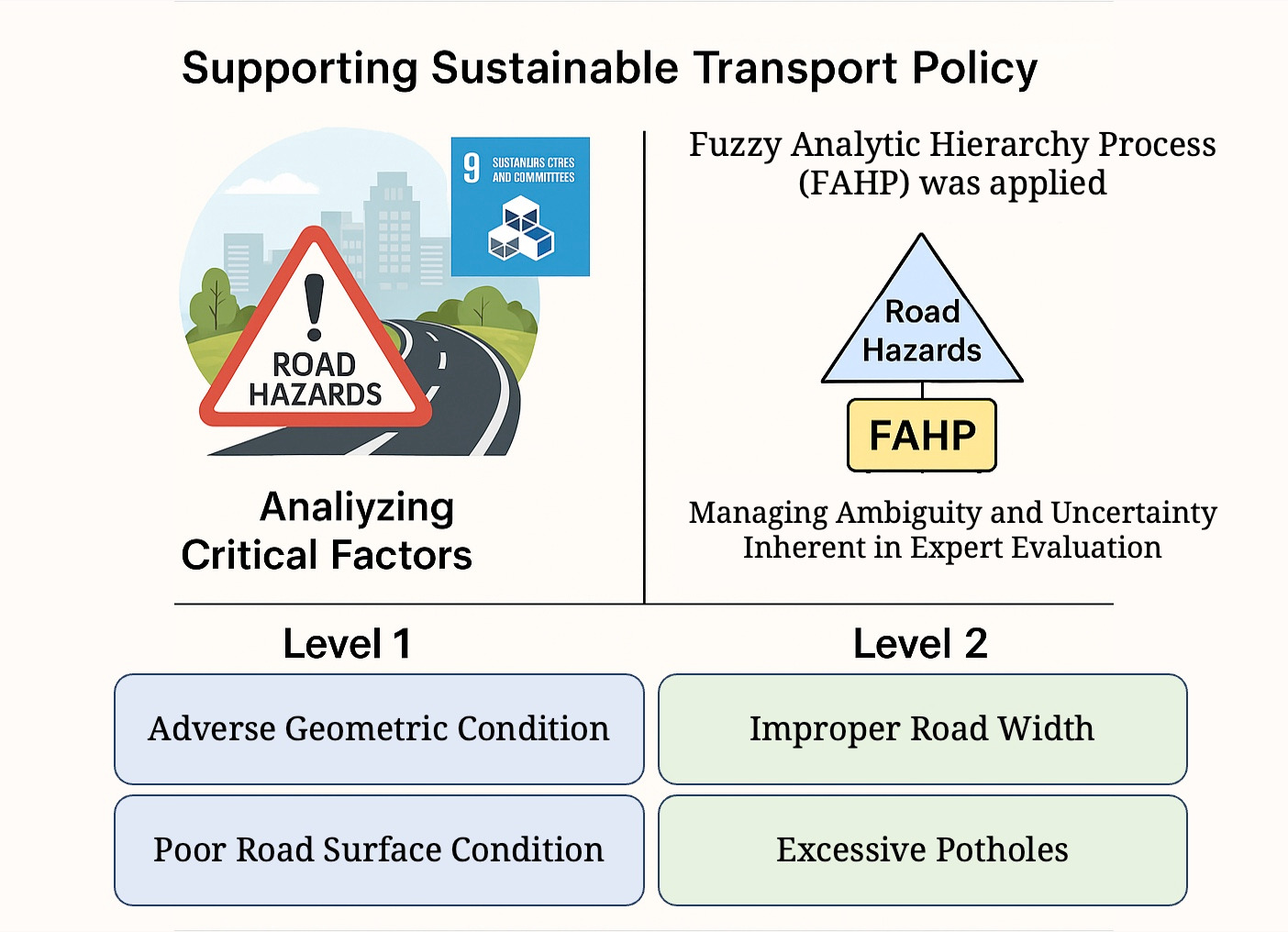
Improving road safety is essential for building sustainable and resilient urban infrastructure, in line with the United Nations Sustainable Development Goals (SDGs). This study aims to support sustainable transport policy by evaluating the impact of critical factors on road hazards using an efficient decision-making model. The Fuzzy Analytic Hierarchy Process (FAHP) was applied to manage ambiguity and uncertainty inherent in expert evaluations. A real-world decision-making scenario was analyzed, focusing on factors influencing road safety. The FAHP results for the first level identified "Adverse Geometric Condition" as the most significant factor contributing to road hazards (weight: 0.6811), while "Poor Road Surface Condition" was the least impactful (weight: 0.1332). At the second level, "Improper Road Width" emerged as the top sub-factor (weight: 0.2557), whereas "Excessive Potholes" ranked lowest (weight: 0.0129). These findings provide a structured and data-driven foundation for policymakers to prioritize interventions that promote safer, more sustainable transportation systems.