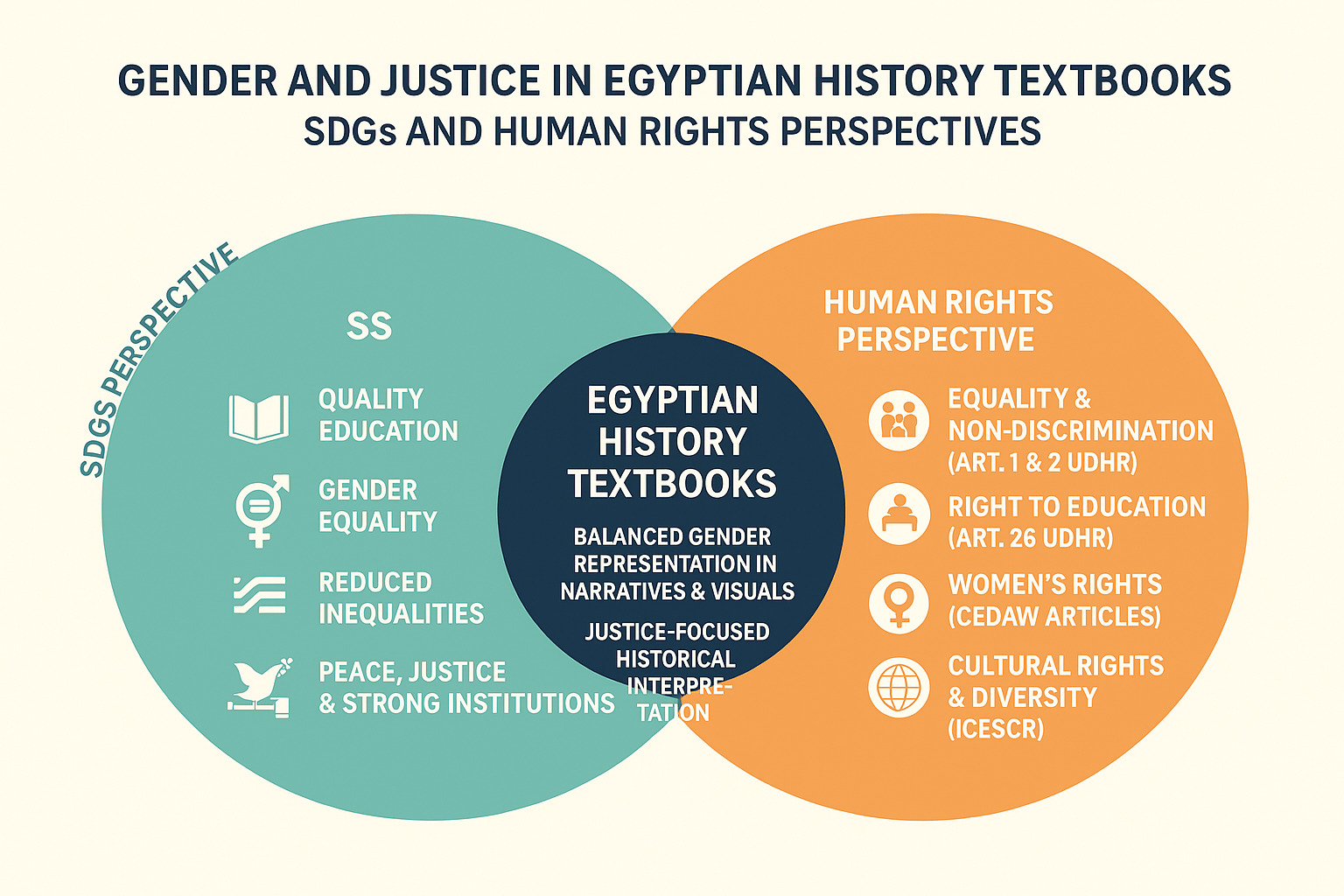
Gender and Justice in Egyptian History Textbooks SDGs and Human Rights Perspectives
DOI:
https://doi.org/10.59543/ijsdg.v1i.15381Keywords:
Gender Representation, History Education, Educational Justice, Sustainable Development Goals, Education for Sustainable DevelopmentAbstract
This study examines how Egyptian secondary school history textbooks represent gender and justice, in light of SDG 4.7 and human rights values. It addresses the problem of male-dominated narratives and the marginalization of women and diverse perspectives in school history. The study aims to assess the extent to which these textbooks support inclusive, justice-oriented education. A qualitative method was used, combining content and discourse analysis of the official textbooks for grades 10, 11, and 12 (2024/2025). Findings show a dominant masculine narrative, limited female representation, and narrow justice concepts framed within nationalism and authority. Marginalized voices are largely excluded. The study concludes that current textbooks reinforce traditional power hierarchies and fall short of global educational goals, calling for curriculum reform to support gender equity and critical citizenship.